
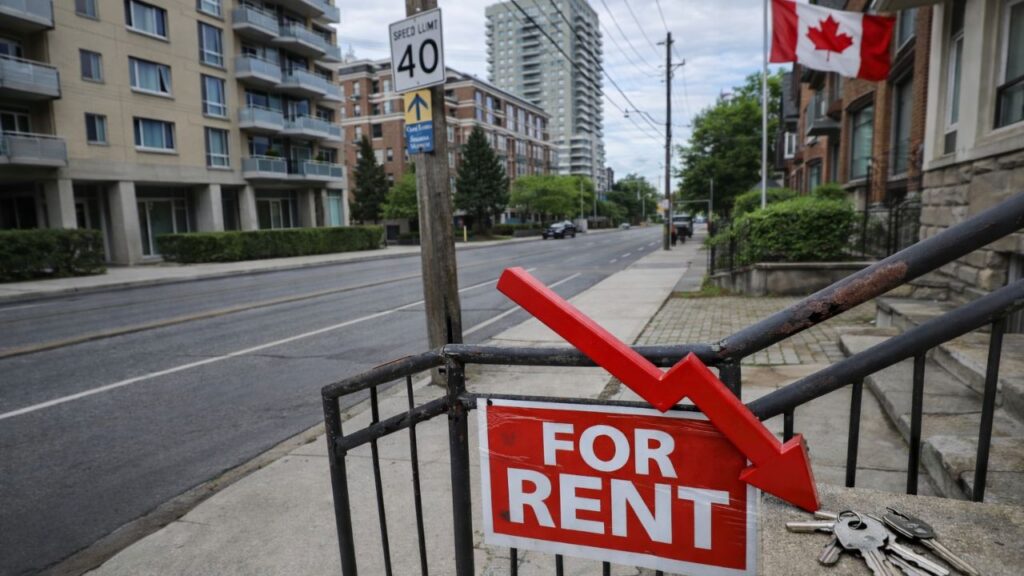
Toronto’s rental market is showing noticeable changes in 2026, with the latest report from Rentals.ca and Urbanation revealing a significant easing in rental costs. In February, the average monthly rent in Toronto settled around $2,482, representing a decline of about 5.3 per cent compared with the same month in 2025. The decrease is even more pronounced when compared to 2024, with rents now sitting roughly 11.7 per cent lower than what tenants were paying two years ago. Analysts say this shift reflects broader changes in Canada’s housing landscape, where supply growth and shifting demand patterns are beginning to rebalance the market.
Major Rent Declines Across Different Apartment Types
The report also highlights that Toronto recorded some of the sharpest rent reductions among Canada’s largest housing markets. Studio apartments experienced the biggest drop, falling by approximately 7.9 per cent. One-bedroom units followed closely with a 6.9 per cent decline, while two-bedroom apartments dropped by around 7.1 per cent year over year. Experts believe these reductions signal a cooling phase after years of rapid increases. Giacomo Ladas, associate director of communications at Rentals.ca, explained that Toronto’s rental market is currently experiencing one of the most noticeable cost corrections seen in recent years.
Growing Supply Putting Pressure on Rental Prices
According to industry analysts, one of the biggest reasons behind falling rents is the large number of new rental units entering the market. Ladas pointed out that Toronto is currently seeing a surge of newly built purpose-built rental properties and condominium units becoming available. Because of this wave of new supply, he believes it will be difficult for demand to rise enough to absorb all these units throughout 2026. With more apartments available than renters searching for them, landlords are increasingly forced to lower asking prices or introduce incentives to attract tenants.
Experts Say Rental Market May Stay Soft for Now
Ralph Fox, broker of record and co-founder of Fox Marin Associates, believes the rental market naturally moves in cycles. In the short term, he expects the market to remain relatively soft as economic pressures, immigration trends, and new supply continue to influence rental availability. However, he also notes that markets tend to rebalance over time. While rents previously climbed faster than incomes, the current slowdown could offer a healthy reset for the housing market. According to Fox, this shift may give younger residents a better opportunity to save money and plan for their future.
Other Ontario Cities Also Seeing Rent Declines
Toronto is not the only city experiencing falling rents. Several nearby Ontario markets have also reported noticeable decreases in rental prices. In Oakville, the average rent for a one-bedroom apartment sits at around $2,458 per month, reflecting a 4.1 per cent decline year over year. Burlington has also recorded a drop, with one-bedroom units averaging $2,356 per month, about 4.5 per cent lower than last year. These declines suggest that the broader regional rental market is experiencing similar supply-driven pressure.
Rental Incentives and Smaller Units Shaping Demand
Another factor influencing the rental market is the increase in incentives offered by newer buildings. With demand weakening slightly, landlords are trying to attract tenants by offering promotions such as several months of free rent, complimentary parking, or even airline loyalty rewards like Aeroplan points. Ladas also pointed out that the average size of rental units has been shrinking. The typical rental apartment now measures about 826 square feet, representing a decline of roughly 6.3 per cent compared with previous years. Despite this change in size, the average rent per square foot has remained relatively stable.
Younger Renters Adapting to Smaller Living Spaces
While some renters worry about shrinking unit sizes, others see them as a practical trade-off for affordability and location. Fox notes that many younger renters are increasingly open to smaller apartments as long as they offer efficient layouts and good building amenities. In large urban centres like Toronto, the combination of design, convenience, and affordability often matters more than raw square footage. Well-planned units with modern features can still provide comfortable living spaces even if they are slightly smaller than traditional apartments.
Rent-Controlled Buildings Becoming More Attractive
Fox also observed that many younger renters are specifically searching for buildings that offer rent-controlled units. These properties provide greater financial stability because rent increases are limited under provincial regulations. In an environment where housing costs have historically risen quickly, renters see rent control as a way to protect themselves from sudden price jumps in future years. As a result, buildings with regulated rent increases are becoming increasingly competitive within the market.
Falling Rents Could Benefit Tenants in the Coming Months
Although predicting future housing trends remains difficult, analysts say the current environment could become increasingly favourable for renters if prices continue to decline. Many tenants who already live in older apartments are beginning to notice that newer buildings nearby—often with modern amenities—are now renting for hundreds of dollars less than what they currently pay. In some cases, renters are attempting to negotiate lower rents with their landlords, while others are choosing to move to newer buildings offering better deals. If this trend continues, competition among landlords could further improve conditions for tenants across the Toronto market.
