
Senior drivers will no longer be able to renew their licenses without taking a test as of March 19, 2026. An important shift in the way older drivers maintain their driving privileges is the implementation of new driving tests. Although the changes are being described as a means of making the roads safer, they have generated a lot of discussion among road safety experts, families, healthcare professionals, and senior citizens.
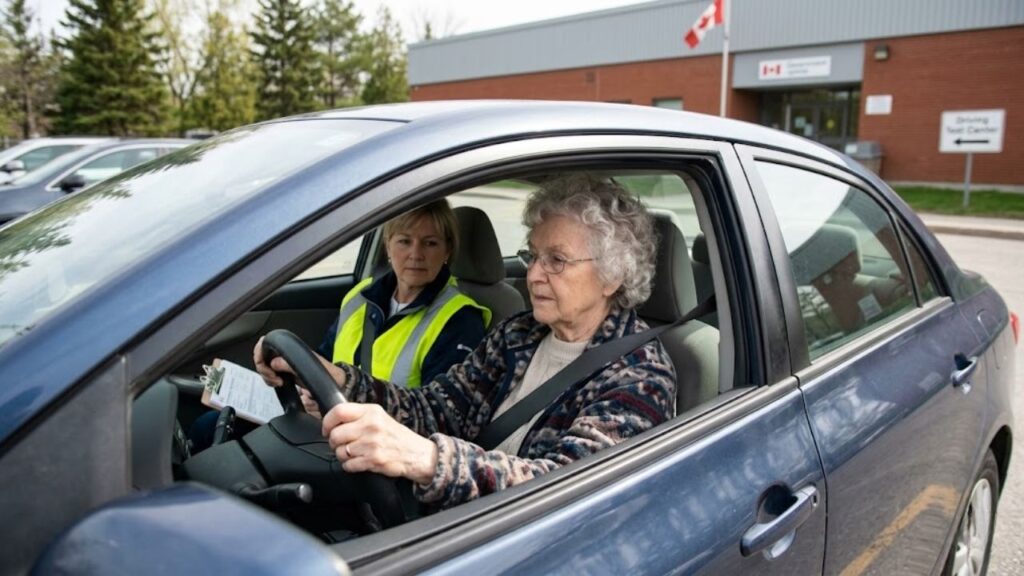
Goodbye to Test-Free Renewals
This article discusses the changes, who will be impacted, what the new checks will look like, why governments are taking this action, and how older drivers can prepare. It also discusses common concerns misconceptions and practical advice for maintaining compliance without causing additional stress for senior drivers.
Why Test-Free Renewals Are Ending
Many locations made it simple for senior citizens to renew their driver’s licenses for a very long time. In most cases, drivers were not required to undergo formal testing; instead, they were only required to sign a declaration stating that they were healthy.
Authorities now claim that this approach is incompatible with the current state of affairs. The population is aging, people are living longer and more drivers are continuing to drive into their seventies and eighties. Although experience is crucial aging-related changes in vision, reaction time, and cognitive processing can make driving more difficult in ways that are not always apparent to the driver.
Governments claim they don’t want to deny seniors their licenses all they want is for everyone to be able to drive safely in today’s traffic which is far more complicated than it was decades ago.
When the New Regulations Take Effect
On March 19 2026, the new inspections for senior drivers will begin any license renewal submitted on or after this date will be subject to the new regulations.
Under the current system seniors whose licenses expire before that date will still be able to renew them. The new assessment requirements must be fulfilled by those who renew on or after March 19, 2026.
Many seniors schedule their renewals months in advance, so this timing is crucial. You might have to complete tasks that you weren’t previously required to complete if you miss the deadline.
Who Will the New Driving Tests Affect
The age limit varies by location, but the changes only impact older drivers. The new checks will typically only be available to drivers who are at least 70 or 75 years old. As the age group ages, the regulations will become more stringent.
Typically impacted groups include:
- Drivers renewing a standard private vehicle license
- Regardless of their driving record seniors who are renewing after the effective date
- During the renewal process drivers with health issues were identified
- Professional drivers and those with commercial licenses frequently have to abide by more stringent regulations
The Content of the New Driving Exams
The assessment procedure is now more organized thanks to the new system although the details may differ by location most senior drivers can anticipate a combination of the following checks.
Assessment of Medical Fitness
An essential component of the new renewal procedure is a medical review. A medical report completed by a licensed physician may be required of seniors.
Typically the evaluation consists of:
- Vision clarity and field of vision
- The capacity to hear when needed
- Nervous system health
- Heart and blood vessel stability
- Conditions include Parkinson’s disease diabetes and epilepsy
- Drugs that could impair your alertness or cause you to react more slowly
It is not anticipated that doctors will automatically fail drivers due to their advanced age. Rather they determine whether the individual is healthy enough to operate a vehicle safely.
Vision Testing Requirements
Every time an older driver renews their license they must pass a vision test. This might consist of:
- Observing license plates from a predetermined distance
- Examinations for normal vision
- Peripheral vision examinations
You can wear corrective lenses but if you don’t fit the requirements you might have to take another test or be subject to limitations like being able to drive only during the day.
Cognitive and Reaction Tests
Simple tests are being used in some locations to assess people’s cognitive or behavioral abilities. These are not intelligence tests they focus on focus and awareness how quickly you decide and the capacity to comprehend multiple road signs.
Finding drivers who might struggle with contemporary traffic demands such as complex intersections or fast merging is the aim.
Roadside Driving Tests
Not every senior will be required to take a road test. You might need to take an on-road test if any of the following apply:
- Concerns are raised by a medical review
- A driver has a history of numerous collisions and traffic infractions
- The application is marked for further review by the renewal authority
These exams are typically shorter than standard driving exams and concentrate on practical safety rather than minor technical errors.
How Frequently Seniors Will Take Exams
Seniors may need to renew their licenses more frequently as a result of the new regulations. Instead of every five or ten years some older drivers may need to renew their licenses every one to three years.
How frequently it occurs depends on:
- A group of individuals
- Health problems
- Findings from previous experiments
Instead of depending solely on a single declaration this enables the authorities to monitor changes over time.
Why Governments Declare That Changes Are Required
Officials give several explanations for terminating renewals without testing.
An increasing number of elderly people are driving
The number of senior drivers is higher than it has ever been. Because healthcare is improving people are staying active longer but this also means that there are more elderly drivers on busy roads.
More intricate traffic
There are more things to occupy your time on modern roads including increased traffic faster speeds and improved vehicle technology. Driving now requires you to make decisions more quickly than in the past.
Risk and Safety Data Patterns
Although older drivers are not always the most likely to be involved in accidents research indicates that they are more likely to suffer serious injuries when they do occur. Proactive assessments according to governments prevent issues before they arise rather than after.
Striking a Balance Between Safety and Independence
Authorities emphasize the connection between driving and independence particularly for senior citizens who require cars to visit friends go to the doctor and buy groceries. They claim that the objective is to maintain it in a responsible manner rather than to eradicate it.
Concerns that seniors frequently have
It makes sense that people are concerned about the announcement of new driving tests.
Fear of losing your independence
Many elderly people fear they will lose their freedom if they fail an assessment. According to officials the majority of healthy drivers will pass without any issues.
The cost of medical evaluations
Tests and medical reports could be expensive for seniors on fixed incomes this is a major concern. Some regions are investigating lower-cost assessments or subsidies.
Concerned About Exams
Test anxiety can affect even seasoned drivers tests should be fair courteous and age-appropriate according to authorities.
Inability to comprehend automatic disqualification
A driver is not incapable of operating a vehicle due to their age alone exams are determined by aptitude rather than birth year.
What Takes Place When a Senior Doesn’t Pass a Test
You may not always permanently lose your license if you fail an assessment.
Among the potential results are:
- briefly put on hold while more data is obtained
- Limitations on the license such as the ability to drive only during the day
- Further medical attention is required following the initial one
- Retesting after a predetermined period of time
Through the appeals process drivers can typically request an independent review or a second opinion.
How Elderly People Can Prepare Early
Renewing can be a simpler and less stressful process if you are prepared.
Schedule a medical examination as soon as possible
Seeing a doctor before renewing helps identify issues early and allows you time to address them or make adjustments.
Revise Your Prescription for Vision
Frequent eye exams reduce last-minute surprises and ensure that vision standards are met.
Keep Your Body and Mind Active
You can become a better driver overall by engaging in activities that improve your reflexes coordination and attention.
Enroll in a driving refresher course
You can gain more self-assurance learn traffic laws and demonstrate your concern for safe driving by enrolling in a voluntary senior driving course.
How Families and Caregivers Can Assist Seniors
During this period of transition family members are crucial.
- Be calm and courteous when discussing the changes
- Assistance with scheduling appointments and completing paperwork
- Don’t be scared concentrate on your safety
- Investigate alternative modes of transportation if necessary
Open communication preserves people’s dignity and keeps things from getting out of control.
What This Means for Seniors’ Driving in the Future
The elimination of test-free renewals is a component of a larger shift in the way governments view traffic safety. Age-based presumptions are giving way to ability-based evaluations.
Future tests may also change as automotive technology advances such as with regard to driver-assist features. Seniors who stay current and adapt to the times are likely to continue driving safely for a very long time.
Beginning on March 19 2026 senior drivers will have to cope with a new reality. Licenses will no longer be renewed automatically and test-free renewals are becoming less frequent. Although the new checks are intended to keep everyone on the road safe while still enabling their independence change can be frightening.
With some preparation and assistance the majority of seniors should be able to manage these changes. Being proactive knowledgeable and involved is the best way to handle the new regulations and continue to drive with confidence.
